

No matter how good your product or service is, there are always going to be instances where you have to deal with a few angry customers.
Whether they’re upset about a product defect, a late delivery, or simply bad customer service, the way you communicate with angry customers can have a big impact on how they perceive your business.
What’s even trickier is interacting with such customers via email. Because a communication channel like email doesn’t account for non-verbal cues. You can’t really ‘show’ empathy or how you truly feel about their frustrating experience.
That doesn’t mean that it’s impossible. A well-crafted email response can pacify an angry customer and turn the bad experience around.
It can show the customer that you are listening to them and that you’re committed to resolving their issue.
In this blog, we’ll take you through 15 effective email response templates to handle angry customers.
15 Effective Email Templates to Handle Angry Customers
Here are some sample email templates to effectively handle customer complaints and unhappy customers:
Template 1: Expressing Genuine Empathy and Understanding
This template aims to genuinely understand the customer’s feelings and situation. It should apologize sincerely and show that their emotions and concerns are valid and taken seriously.
Subject: We Hear You, [Customer’s First Name]
Dear [Customer’s Name],
I felt your frustration and disappointment after reading your message, and I’m truly sorry. At [Company Name], we aim for positive customer experiences. It’s sad to know we fell short with you.
Your feelings are valid, and I want you to know that your concerns are being taken to heart. Here’s how we’re immediately addressing the situation:
1. **Issue Escalation**: Your feedback has been elevated to our senior management, ensuring it receives the attention it warrants.
2. **Prompt Review**: Our customer service team is delving into the specifics of your concern, aiming to understand and rectify any lapses on our part.
I’d be grateful for an opportunity to discuss this further and explore ways to make amends. If you’re open to it, please let me know a convenient time for you, and I will personally ensure we address all your concerns.
Thank you for bringing this to our attention. We’re genuinely sorry and are dedicated to making things right.
Warm regards,
[Your Name]
[Your Title]
[Company Name]
[Contact Information: Email, Phone]
Template 2: Acknowledging the Customer’s Frustration
A quick way to calm an angry customer is to acknowledge their feelings. When customers feel heard, they’re more willing to discuss the issue.
Subject: We Understand Your Frustration, [Customer’s First Name]
Dear [Customer’s Name],
First and foremost, I want to acknowledge your frustration and disappointment. No one likes feeling this way, especially due to a service or product they’ve invested in. I’m truly sorry that you’ve had to experience this with [Company Name].
Here’s what we’re doing right now:
1. **Immediate Investigation**: Your specific concerns have been shared with our team, and we’re currently looking into the matter to identify where things went wrong.
2. **Prioritized Response**: We’re treating your feedback with urgency, and I promise to get back to you with more specifics and potential solutions by [specific time frame, e.g., “end of day tomorrow”].
In the meantime, if there are additional details you’d like to share or if there’s a preferred way for us to address this, please don’t hesitate to let me know. Your perspective and satisfaction are paramount to us.
Warm regards,
[Your Name]
[Your Title]
[Company Name]
[Contact Information: Email, Phone]
Recommended reading
How to Deal With Difficult and Angry Customers (15 Tips and Examples)
Template 3: Offering a Sincere Apology on Behalf of the Company
Sometimes, an upset customer just needs a sincere apology. This template simply acknowledges the company’s mistakes. It avoids excessive explanations or justifications.
Subject: Our Sincere Apology, [Customer’s First Name]
Dear [Customer’s Name],
I’m writing to personally express our deepest apologies for the situation you faced with [Company Name]. It’s clear that we missed the mark, and for that, I’m genuinely sorry.
Taking ownership of our missteps is important to us. We value your trust, and it’s disheartening to know we jeopardized that.
If you’re open to it, I would appreciate understanding more about your experience. Your insights would be invaluable in helping us ensure this doesn’t happen in the future. You can respond to this email or reach out directly to me at [Your Direct Line or Email].
Thank you for your patience and understanding, and once again, I apologize on behalf of all of us at [Company Name].
Warm regards,
[Your Name]
[Your Title]
[Company Name]
[Contact Information: Email, Phone]
Template 4: Taking Accountability and Assuring Resolution
This template emphasizes acknowledging a mistake and assuring the customer it will be fixed. This approach shows responsibility, commitment, and progress.
Subject: We’re Taking Action, [Customer’s First Name]
Dear [Customer’s Name],
I’m reaching out to both acknowledge and sincerely apologize for the experience you had with [Company Name]. We hold ourselves to high standards, and in this instance, we fell short. I want to assure you that we take full responsibility.
Here’s our immediate course of action:
1. **Problem Diagnosis**: We’re conducting a thorough review to understand the root cause of the issue you faced.
2. **Prompt Solution**: By [specific timeframe, e.g., “end of the week”], we aim to have a resolution in place.
3. **Ensuring Non-recurrence**: We’re working on implementing additional checks and measures to ensure this situation doesn’t arise again in the future.
I value your trust and patience as we work through this. Please feel free to reach out to me directly at [Your Direct Line or Email] if you have any further questions or require updates on our progress.
Warm regards,
[Your Name]
[Your Title]
[Company Name]
[Contact Information: Email, Phone]
Template 5: Providing Clear Information and Explanation
When a customer is angry or frustrated due to confusion about a product, service, or policy, it’s vital to offer a clear explanation. This template aims to clarify misunderstandings. It explains the company’s position and guides the customer on next steps.
Subject: Clarity on Your Concerns, [Customer’s First Name]
Dear [Customer’s Name],
I understand your frustration regarding [specific issue or policy], and I apologize for any confusion or inconvenience this may have caused. Let me provide some clarity on this matter:
[Explanation in a structured manner, e.g., “Our policy on XYZ was put in place due to ABC reasons. Here’s a step-by-step breakdown of how it works:
1. Step one and its rationale…
2. Step two and its rationale…”]
I recognize that this might be different from your initial understanding, and I genuinely apologize for any oversight in communication on our part.
Here’s what you can do now:
[Provide actionable steps if applicable, e.g., “To rectify this, please follow these steps:
1. Log into your account…
2. Navigate to…”]
Please rest assured, that our primary goal is to ensure you have a seamless experience with [Company Name], and we’re here to support you every step of the way. If you have any further questions or need clarification on another topic, please don’t hesitate to reach out.
Warm regards,
[Your Name]
[Your Title]
[Company Name]
[Contact Information: Email, Phone]
Recommended reading
Template 6: Correcting Misunderstandings and Clarifying Concerns
When facing angry customers, show empathy, professionalism, and focus on solutions. This email template acknowledges the issue, clarifies, offers a solution, and ends positively.
Subject: Addressing Your Concerns and Finding a Solution
Hello [Customer’s Name],
First and foremost, I want to genuinely apologize for the experience you’ve had with [Company Name]. We value every piece of customer feedback we receive, and it’s clear that we did not meet your expectations in this instance.
I’ve reviewed the details surrounding your concern about [specific issue]. It appears there might have been a misunderstanding regarding [specific point of confusion]. Let me clarify [clarification of the point]. I hope this provides a clearer picture of the situation.
To make things right and ensure this doesn’t happen again in the future, we’re [specific corrective action: e.g., “issuing a refund,” “providing a replacement,” “offering a discount coupon on your next purchase,” “adjusting our protocol”].
I understand how crucial it is for our customers to trust our services and products, and we genuinely regret any inconvenience caused.
If you have any additional questions, concerns, or if there’s any other way I can assist further, please do not hesitate to reach out directly to me at [Your Direct Line or Email].
Warm regards,
[Your Name]
[Your Title]
[Company Name]
[Contact Information: Email, Phone]
Template 7: Outlining the Steps Toward Resolution
Angry customers seek clear solutions. Showing them how you address their concerns eases frustration and restores trust in your product or service. This template outlines resolution steps, ensures transparency, and demonstrates a proactive approach.
Subject: Your Concern is Being Addressed: Here’s Our Plan
Dear [Customer’s Name],
Firstly, I deeply apologize for the inconvenience you’ve encountered with [Company Name]. We truly regret that our service/product didn’t meet your expectations, and I understand your frustration.
To address your concerns and work towards a resolution, here’s the action plan we’ve put in place:
1. **Immediate Assessment**: We are currently reviewing the specifics of your issue with the relevant department/team. [If you have a timeframe, e.g., “This should be completed by [Date].”]
2. **Root Cause Analysis**: By [specific date], we aim to identify the underlying cause of the problem, ensuring that we not only address your concern but also prevent such issues in the future.
3. **Implementation of Solution**: Once the cause is identified, we will take appropriate corrective actions. You can expect a resolution by [specific date].
4. **Follow-up**: After the solution is implemented, we’ll reach out to ensure you’re satisfied with the outcome and to gather any feedback you might have.
Your patience during this process is greatly appreciated. In the meantime, should you have any questions, require updates, or have further feedback, please don’t hesitate to reach out to me directly at [Your Direct Line or Email].
We are committed to rectifying this matter promptly and ensuring a smoother experience for you in the future.
Warm regards,
[Your Name]
[Your Title]
[Company Name]
[Contact Information: Email, Phone]
Template 8: Promising Swift Action and Timely Updates
When an angry customer demands immediate attention, assure them their concerns are a priority. This template shows your commitment to quick action and highlights the need for timely updates.
Subject: Your Concern Is Our Top Priority – Here’s Our Immediate Action Plan
Dear [Customer’s Name],
I am truly sorry to hear about your recent experience with [Company Name]. Please accept our sincerest apologies for the inconvenience you’ve encountered.
Your feedback has been escalated to our senior team, ensuring it gets the priority and attention it deserves. I’ll be your main point of contact throughout this process, making sure you’re kept informed at every stage.
You can expect updates from me every [specific timeframe, e.g., “48 hours”] until this matter is fully resolved. Your satisfaction and trust in our [service/product] are paramount to us.
Should you have any questions or additional feedback during this process, please don’t hesitate to reach out to me directly at [Your Direct Line or Email].
Warm regards,
[Your Name]
[Your Title]
[Company Name]
[Contact Information: Email, Phone]
Template 9: Offering Appropriate Compensation for Inconvenience
When a customer’s bad experience stems from a company’s mistake, offering compensation shows goodwill. This template acknowledges the error and clearly outlines the compensation, leaving no room for confusion.
Subject: Our Apologies & Steps Toward Making It Right
Dear [Customer’s Name],
First and foremost, please accept our heartfelt apologies for the oversight and the inconvenience you’ve experienced with [Company Name]. We recognize that our service/product did not meet your expectations, and we genuinely regret this.
Taking full responsibility for this oversight, we would like to offer you [specific compensation details, e.g., “a full refund,” “a 20% discount on your next purchase,” “a complimentary [specific service or product]”].
We hope this gesture can, in some way, make up for the inconvenience caused.
Further, to ensure such incidents don’t recur:
1. **Review & Feedback**: We are conducting a thorough review of this incident and gathering feedback to understand where our processes can be improved.
2. **Training & Development**: If necessary, we will be providing additional training to our team members to ensure better customer support experiences in the future.
Thank you for bringing this to our attention, and once again, we deeply apologize for the inconvenience.
Warm regards,
[Your Name]
[Your Title]
[Company Name]
[Contact Information: Email, Phone]
Template 10: Presenting Options to Make Amends
Offering customers choices to solve issues can empower them and restore trust. This template provides options, allowing customers to select the solution they believe best addresses their concerns.
Subject: Your Feedback Matters – Let Us Make It Right
Dear [Customer’s Name],
I’m genuinely sorry to hear about the challenges you’ve faced with our [product/service]. It is our top priority at [Company Name] to ensure our customers are satisfied, and it’s clear we fell short in this instance.
To make amends, we’d like to offer you a choice in how we proceed:
1. **Option A**: [e.g., “A full refund of your purchase.”];
2. **Option B**: [e.g., “A replacement product shipped to you with expedited delivery.”];
3. **Option C**: [e.g., “A 30% discount on your next order with us.”].
Please let us know which option you feel would be the best way to rectify this situation. If none of these options feel appropriate, or if you have another suggestion, we’re open to hearing it.
In addition to the above, we’re taking steps internally to ensure similar issues do not arise in the future. Thank you for your understanding and for allowing us the opportunity to make things right.
Warm regards,
[Your Name]
[Your Title]
[Company Name]
[Contact Information: Email, Phone]
Template 11: Demonstrating Exceptional Customer Care and Personalized Support
Frustrated customers want to feel valued. This template aims to show better customer care through personalized support.
Subject: Your Experience Matters – Our Commitment to Making It Right
Dear [Customer’s Name],
Firstly, I want to genuinely acknowledge and apologize for the challenges you’ve faced with [Company Name]. We understand how valuable your time is, and we deeply regret that your experience with us did not reflect the high standards we strive for.
In our endeavor to rectify this and provide exceptional support, I’d like to offer:
1. **Dedicated Support**: [Dedicated Support Person’s Name], a senior member of our support team, will be your direct point of contact. They will personally oversee your case to ensure it’s addressed promptly and to your satisfaction.
2. **Direct Communication**: Should you have any questions or need updates, you can reach out to [Dedicated Support Person’s Name] directly at [Direct Line or Email]. We’re bypassing regular channels to ensure you receive immediate attention.
You are a valued member of our [Company Name] family, and we are wholly committed to restoring your confidence in our [product/service].
Warm regards,
[Your Name]
[Your Title]
[Company Name]
[Contact Information: Email, Phone]
Template 12: Addressing Delays and Extended Wait Times
Long wait times often frustrate customers. This includes delays in shipping, responses, or services. This template aims to tackle such issues. It acknowledges the delay and offers resolution information.
Subject: Addressing Your Wait, [Customer’s First Name]
Dear [Customer’s Name],
Firstly, I want to acknowledge and sincerely apologize for the extended wait you’ve experienced with [specific service or product]. We understand how valuable your time is, and it’s regrettable that we’ve not met our usual timely standards.
The delay was due to [brief reason, e.g., “an unexpected surge in demand which impacted our supply chain”]. We are actively working on rectifying this, and as per our current estimates, you can expect [resolution or delivery] by [specific date].
Your trust means everything to us, and I assure you that we’re doing everything in our capacity to expedite the process and ensure this is an isolated incident.
Should you have any questions or further concerns, please reach out. We’re here to assist.
Warm regards,
[Your Name]
[Your Title]
[Company Name]
[Contact Information: Email, Phone]
Template 13: Responding to Product or Service Quality Concerns
When a customer is unhappy, respond with understanding, a desire to improve, and a solution. This template helps restore trust by addressing quality concerns.
Subject: Addressing Your Concerns, [Customer’s First Name]
Dear [Customer’s Name],
Thank you for bringing your concerns about [specific product/service] to our attention. I deeply regret that what you received did not meet the standards we pride ourselves on.
At [Company Name], we’re committed to delivering only the best. It’s evident we missed that mark in this instance.
As an immediate step, we’d like to offer [specific solution, e.g., “a replacement at no additional cost” or “a full refund”]. Additionally, if you’re open to sharing more detailed feedback, it would greatly assist our quality assurance team in preventing similar issues in the future.
Customer satisfaction is paramount to us, and we’re dedicated to making this right. Please let us know how you’d like to proceed, and if there’s anything else we can assist with.
Warm regards,
[Your Name]
[Your Title]
[Company Name]
[Contact Information: Email, Phone]
Template 14: Redirecting to the Right Team for Faster Resolution
Sometimes a customer issue needs to be handled by a specialized team. This template helps you assure the customer that you’re redirecting them to the right people to speed up the resolution process, maintaining trust and showing that their concern is being prioritized.
Subject: We’re Making Sure You Get the Best Help
Hi [Customer Name],
Thank you for bringing this issue to our attention. I completely understand your frustration, and I want to ensure that your concern is handled by the team best equipped to resolve it.
I’ve already reached out to [Team Name], and they will be getting in touch with you shortly to help resolve this matter as quickly as possible. In the meantime, I’ll keep track of your case to ensure you get the updates you need.
We sincerely appreciate your patience and understanding.
Warm regards,
[Your Name]
[Your Title]
[Company Name]
[Contact Information: Email, Phone]
Template 15: Offering a Follow-Up Call for Further Clarification
After addressing a customer’s concern via email, you might want to follow-up and check if things are going fine. This template offers the option to schedule a follow-up call, showing the customer that you’re willing to go the extra mile to resolve their issue.
Subject: Let’s Discuss Further – Offering a Follow-Up Call
Hi [Customer Name],
I’ve reviewed your concerns, and I completely understand your frustration. I want to ensure that all aspects of this issue are addressed to your satisfaction. Would it be helpful to schedule a quick call to go over the details and make sure we’re on the same page?
Please let me know a convenient time for you, and I’ll make sure we connect to discuss this further.
I’m committed to resolving this for you and making sure we turn this experience around.
Warm regards,
[Your Name]
[Your Title]
[Company Name]
[Contact Information: Email, Phone]
7 Key Strategies for Responding to Angry Customers
Responding to angry customers requires a delicate balance of empathy, understanding, and problem-solving. Here are five key strategies for effectively handling such situations, irrespective of the channel:
#1 Stay Calm and Professional:
Stay calm with angry customers. Responding professionally can ease the situation. Don’t get defensive, raise your voice, or use confrontational language. Your goal is to resolve the issue, not to increase tension.
#2 Listen Actively:
Let the customer finish before you respond. Listen to show you care. This shows you value feedback and want to fix their issue. For example, if a customer is upset about a late delivery, you might say, “Thanks for telling me. I’m sorry for the delay. Could you share more details?”
#3 Empathize and Validate:
Show empathy by acknowledging the customer’s feelings and frustrations. Validate their concerns and demonstrate understanding of their experience. This approach can ease their emotions and lead to better communication.
For instance, if a customer is unhappy with a faulty product, you might say, “I’m really sorry about the issue. I understand how frustrating it is. Let’s fix this together.”
#4 Apologize and Take Responsibility:
Apologizing sincerely, even if it’s not your fault, shows you value the customer’s concerns. Taking responsibility for the issue reflects your commitment to improving their experience.
#5 Provide a Solution:
Work with the customer to solve their problem. Offer solutions that address their concerns. Provide alternatives if needed. Ensure the solution matches your company’s policies and the customer’s expectations.
For instance, if a customer gets the wrong item, you could say, “I’m sorry for the error. I can send the right one now or give a full refund. Which do you prefer?”
#6 Follow Up and Keep the Customer Informed:
After proposing a solution, stick to your promises. Always update the customer on their issue, especially if it takes time. Proactive communication reassures them, preventing frustration from feeling ignored.
For example, if someone is waiting for a replacement, you could say, “Your replacement is on the way and should arrive by Friday. If you have questions, feel free to reach out to me.”
#7 Learn and Improve:
After solving a customer’s issue, think about how to prevent it from happening again. Angry customers offer feedback on process gaps. Using this feedback to improve shows you care about excellent customer service.
For instance, if you get many complaints about shipping delays, review your logistics. Look for ways to be more efficient and avoid delays. Also, updating customers on these improvements can help rebuild trust.
The Right Tool Makes Handling Angry Customers Easier
Handling angry customers is a skill every support team needs. If done poorly, it can lead to bad reviews, lost business, or even legal trouble. But when handled well, these tough conversations can actually turn frustrated customers into loyal ones. It’s all about how you respond—with the right words, the right tone, and the right tools.
This is where Hiver makes a difference. Unlike most helpdesks that turn customer queries into ticket numbers, Hiver treats every customer query as a conversation. It still gives your team the ability to track, assign, and resolve queries efficiently—but without losing the personal touch that customers appreciate.
At the same time, Hiver keeps things simple. Most helpdesks require teams to migrate to an entirely new platform, which adds complexity. Hiver, on the other hand, combines powerful help desk features with an inbox-like interface. Teams can manage customer interactions across multiple support channels as well as their regular work emails from the same place.
For example, if a customer emails about a failed payment, their query gets instantly auto-assigned to the right support agent.
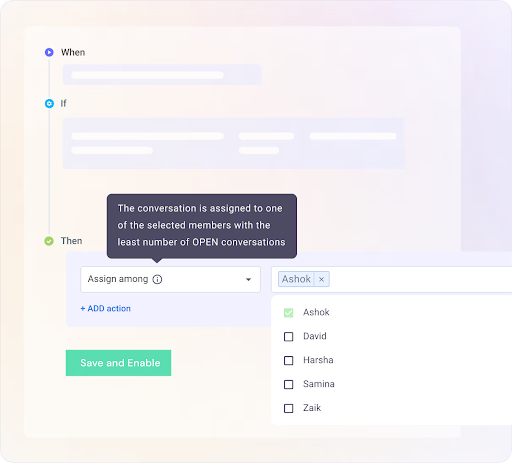
From there, the support staff can use Hiver’s AI Copilot to get suggestions on what to respond. Or they can use any of the existing response templates, add a touch of personalization, and communicate with the customer.
More than 10,000 teams trust Hiver because it’s simple to use, quick to set up (just 15 minutes), and built for fast, personalized support.
Handling angry customers is never easy. But with the right tool, it’s definitely manageable. Try Hiver free for 7 days and see how it helps your team.