

You sign up for a new software tool. The onboarding is smooth, the support team is helpful, and everything feels seamless. A few months in, things start to change—responses take longer, updates feel confusing, and suddenly, the excitement fades.
Is this a customer success problem or a customer experience issue? And which one actually makes a bigger impact?
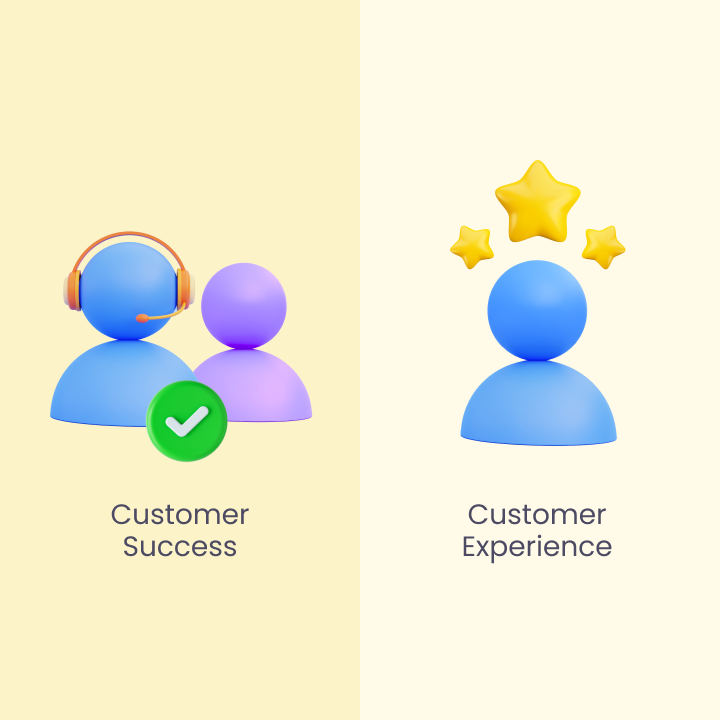
These two terms often get used interchangeably, but they serve different purposes. One focuses on helping customers achieve their goals, while the other shapes their entire journey with your brand. So, which one truly matters more? Let’s break it down.
[cta_block]
What is Customer Success?
Customer success helps customers get the most value from a product or service. It’s proactive—guiding them toward their goals, solving challenges before they arise, and keeping them engaged.
For example, a company switches to a new project management tool. Instead of waiting for users to figure things out on their own, the customer success team steps in with onboarding guides, best practices, and regular check-ins. They make sure teams are using the tool effectively and seeing real benefits.
Customer success focuses on making sure customers achieve their goals while staying engaged with the product. Here are some key objectives:
✅ Helping customers reach their goals: Understanding what success looks like for them and guiding them toward it.
✅ Driving product adoption: Making sure customers use the right features to get the most value.
✅ Reducing churn: Proactively addressing challenges so customers don’t leave.
✅ Building strong relationships: Regular check-ins, personalized support, and ongoing engagement.
✅ Identifying upsell opportunities: Helping customers grow with the product by introducing relevant upgrades.
✅ Gathering feedback for improvement: Understanding what’s working and what’s not to refine the customer journey.
Now to achieve these key objectives, you need Customer Success Managers (CSMs), and define their roles properly.
Customer Success Managers (CSMs) act as strategic partners, helping customers achieve their goals and get long-term value from a product. Their role goes beyond basic support—they focus on building relationships, driving adoption, and preventing churn.
Here’s what CSMs do:
- Onboarding and training – Guide new customers through the setup process, ensuring a smooth start.
- Proactive support – Identify potential challenges before they become problems and offer solutions.
- Regular check-ins – Stay in touch with customers to track progress, offer best practices, and keep them engaged.
- Advocating for customers – Gather feedback and work with internal teams to improve the product.
- Identifying growth opportunities – Suggest upgrades or additional features that align with customer needs.
For instance, a fashion e-commerce brand adopts a new customer support platform but struggles to use automation features. The customer success manager notices this and reaches out with a quick walkthrough, helping them set up automated ticket assignments. Within days, their response times improve, and agents feel more confident.
What is Customer Experience?
Customer experience (CX) is the big picture. It’s how a customer feels about your brand based on every interaction they have with you.
In the words of Shep Hyken, Customer Service and Experience Expert:

From finding your product to buying it and getting support, every interaction shapes how customers feel about your brand. CX isn’t just about using the product; it also includes things like how easy your website is to use and how quickly your support team responds.
Customer experience (CX) focuses on creating a smooth, enjoyable journey for customers at every touchpoint. Here are some of its key objectives:
✅ Delivering seamless interactions – Ensuring every touchpoint, from website navigation to support calls, feels effortless.
✅ Building emotional connections – Making customers feel valued through personalization and thoughtful engagement.
✅ Reducing friction – Identifying and eliminating pain points that cause frustration.
✅ Creating consistency – Maintaining a uniform experience across all channels, whether it’s email, chat, or in-person interactions.
✅ Encouraging advocacy – Turning satisfied customers into brand advocates who spread positive word-of-mouth.
Take the example of Apple. From their sleek packaging to their helpful in-store staff and smooth online ordering process, every interaction feels premium and intentional. This attention to detail helps Apple create a memorable experience that keeps customers coming back.
So, customer experience covers the entire journey with your brand—before, during, and after a purchase. It’s about creating positive impressions at every stage, from your website to post-purchase support.
CX teams work to:
- Identify and fix pain points: Analyze customer complaints, drop-off points, and support interactions to remove friction.
- Optimize key touchpoints: Improve website navigation, onboarding, checkout, and support channels for a smoother experience.
- Personalize interactions: Use customer data to tailor communication, recommendations, and support responses.
- Collect and act on feedback: Regularly survey customers, analyze trends, and implement changes based on their needs.

Key Differences Between Customer Success and Customer Experience
Customer success (CS) and customer experience (CX) both focus on keeping customers happy but approach it differently.
Here’s a quick comparison to break it down:
| Aspect | Customer Success (CS) | Customer Experience (CX) |
|---|---|---|
| Primary Focus | Helping customers achieve their goals with the product | Creating a positive experience at all touchpoints |
| Approach | Proactive – prevents issues before they arise | Reactive – addresses issues as they occur |
| Team Involvement | Dedicated CS teams, often with Customer Success Managers | Cross-departmental effort (marketing, support, sales) |
| Key Metrics | Retention, upsell rates, product adoption | CSAT, NPS, CES |
| Scope | Focuses on product usage and long-term success | Covers the entire customer journey |
| Timing of Engagement | During product usage, post-onboarding | Throughout the entire lifecycle |
| Goal | Drive retention and reduce churn | Build loyalty and brand advocacy |
1. Proactivity vs. Reactivity
Customer success steps in early, offering a tutorial or a check-in call to ensure the customer understands the tool’s features and is set up for success. If the customer encounters issues later, customer success is already prepared to help, preventing potential problems.
In contrast, customer experience responds to issues as they arise, like when a customer reaches out about difficulty navigating the website or the tool. The CX team would address it then and work on improving the website for future users.

2. Scope of Focus
Customer success focuses on the customer’s ongoing success with the tool. For instance, they track if the user is regularly engaging with key features and achieving the results they want. If the customer is stuck, they offer assistance.
On the other hand, customer experience cares about the entire journey—from the first time the customer visits the website, to the purchasing process, to how smooth and pleasant their support experience is afterward.
3. Metrics of Success
Customer success measures things like how many customers continue using the tool and how many upgrade to premium features. For example, if a customer decides to buy an upgraded plan after a success-focused training session, that’s a win for customer success.
Customer experience, however, would track things like how easy the customer found the checkout process or how satisfied they were with the support chat they used.
The key performance indicators (KPIs) for customer success typically include:
- Customer retention: How many customers stay with the product over time?
- Upsell and cross-sell rates: How often customers purchase additional features or products.
- Product adoption: How fully customers are utilizing the product’s features.
Whereas, the success of customer experience is often measured through:
- Customer satisfaction (CSAT): How happy customers are with individual touchpoints.
- Net Promoter Score (NPS): How likely customers are to recommend your brand.
- Customer Effort Score (CES): How easy it is for customers to get their issues resolved.
“One of the most important metrics for us to track is First Call Resolution (FCR). It’s the percentage of inbound calls that we resolve the first time around. In other words, the customer gets what they wanted on their first call with us. The better this rate is, the better we are doing our jobs with customer support, and the happier our customers are.” – Carsten Schaefer, Founder and Support Head, Trust
4. Timing of Engagement
Customer success kicks in when the customer starts using the tool. If they’re struggling with a feature, customer success teams provide direct help.
Customer experience is present at all customer interactions—during the browsing experience on the website while making the purchase, and after the customer is using the product, ensuring every step is smooth and satisfying.
Which Matters More for Your Business?
Customer success plays a crucial role in keeping your customers happy and driving long-term growth. Let’s explore how focusing on this can benefit your business.
The Case for Customer Success
Customer success is key to keeping customers happy, reducing churn rate, and getting more value from each one. When customers are supported and understand how to use your product well, they’re more likely to stick around longer and spend more.
Take WeightWatchers, for example.

They were facing problems with their B2B sales process, which relied on a lot of manual work and wasn’t very efficient. This slowed down their ability to help customers successfully.
HubSpot’s automation tools streamlined the process, automatically qualifying leads and managing the sales pipeline more effectively. This led to seven-figure annual contracts and 100% team adoption, boosting recurring revenue.
When your customers get value from your product, they’re more likely to stay long-term, leading to increased revenue.
The Case of Customer Experience
Zappos faced a crowded market where many competitors offered similar products at similar prices. Their challenge was to stand out by offering an experience that would build loyalty and encourage customers to return.
Zappos created a customer-centric culture, empowering employees to go above and beyond, resolving issues without managerial approval. They made shopping safer with a 365-day return policy and free two-way shipping, eliminating the risk of online shopping.

They also used personalization, analyzing data to recommend products based on past purchases and browsing behavior.
Zappos consistently ranks high in customer satisfaction and boasts a repeat purchase rate of over 75%.
A strong customer experience builds loyalty, encourages repeat purchases, and boosts brand advocacy. When your customers feel valued and have a seamless experience, they’re more likely to return and recommend your brand.
The Balance Between CS and CX
While customer success focuses on ensuring customers achieve value from your product, customer experience shapes the overall relationship with your brand. Both are essential, but they serve different purposes.
Customer success ensures customers are reaching their goals and getting the most from your product, while customer experience focuses on making every interaction positive, from first contact to post-purchase support. Together, they bring customer satisfaction, retention, and long-term loyalty.
In the end, both customer success and customer experience work hand in hand to create a seamless, valuable relationship between the customer and your business.
How to Align Customer Success and Customer Experience
To get the best results, both teams need to work together. Here’s how to align them effectively.
1. Shared Goals and Collaboration
Customer success and customer experience teams should work towards the same goal: keeping customers happy and retaining them. This means collaborating closely to ensure that every customer interaction—from onboarding to post-purchase—is positive.
With Hiver, your customer success (CS) and customer experience (CX) teams can easily collaborate and stay aligned to shared goals.
- Never miss an email: Hiver automatically delegates emails to the right team member based on skills or round-robin, making sure timely responses and efficient workload management.

- Collaborate without forwards and CCs: Share templates, drafts, and notes within the team, use @mentions, and prevent duplicate responses with collision alerts for smoother collaboration.

- Adhere to SLAs: Set SLA policies, get reminders for emails nearing violations, and prioritize queries to keep your team responsive and on track.
When both teams understand what the other is working towards, they can provide a seamless experience that drives customer satisfaction.
2. Data Sharing and Insights
One of the best ways to align CS and CX is by sharing data and insights. When both teams have access to customer feedback, they can make improvements that benefit the customer. For example, CS teams can share data about customers’ struggles with product features, while CX teams can use that information to improve the support experience.
Hiver simplifies multi-channel support by letting you manage customer interactions across email, live chat, WhatsApp, and voice directly from your inbox.

You can assign and track emails, use live chat for faster responses, integrate chatbots for improved productivity, and create a knowledge base for self-service support.
With all channels in one place, your team can collaborate easily, respond quickly, and maintain efficient communication.
3. Streamlined Communication
To provide a consistent experience, communication between CS and CX needs to be clear and quick. Whether it’s handling customer inquiries or troubleshooting issues, teams must be able to collaborate without delays.
Hiver makes this possible with real-time collaboration tools and automation that help streamline communication. With features like reporting and analytics, teams can stay informed about customer issues, improving how they work together and keeping customers satisfied.

By using Hiver, both CS and CX teams can also collect customer feedback easily and make improvements based on real-time data, creating a more efficient workflow and a better overall experience for your customers.
Conclusion
Customer success helps people achieve their goals, while customer experience shapes how they feel along the way. One is about results, the other about emotions—and both matter. A great product with strong success strategies won’t keep customers if the experience is frustrating. At the same time, a smooth experience won’t mean much if customers don’t see value. The best companies don’t choose between the two—they make them work together.
That’s where tools like Hiver come in. By keeping customer conversations organized inside your inbox, teams can collaborate better, respond faster, and create a smoother experience for every customer. Support feels effortless, and success teams can focus on helping customers grow.
In the end, customer success and experience aren’t competing—they’re partners. When both work well, customers stay, engage more, and become the kind of loyal advocates every business wants.Book a free demo.