

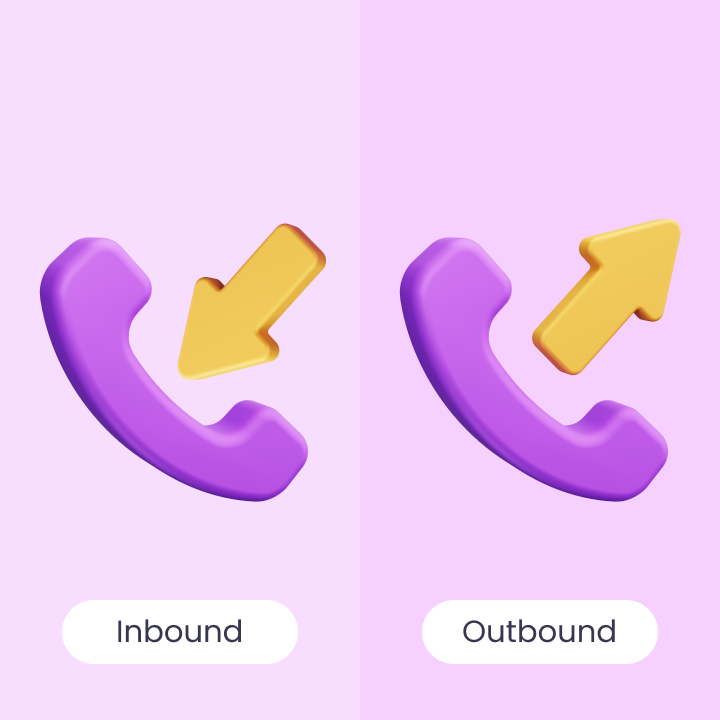
Call centers are the backbone of customer communication, but not all call centers serve the same purpose. Some focus on answering incoming customer inquiries, while others proactively reach out to customers for sales or support. This fundamental difference defines inbound vs. outbound call centers—two models that cater to different business needs.
If your business receives a high volume of customer queries, an inbound call center helps you manage support requests efficiently. On the other hand, if your goal is to drive sales, generate leads, or conduct customer outreach, an outbound call center might be the better fit.
Choosing the right approach isn’t just about deciding who makes the call—it’s about aligning with your business objectives, customer expectations, and operational capabilities. In this blog, we’ll break down the key differences, benefits, and challenges of both models, helping you determine the best strategy for your business.
[cta_block]
What is an Inbound Call Center?
An inbound call center handles incoming calls from customers seeking assistance, whether for support, inquiries, or transactions. These centers are reactive, meaning they respond when customers reach out.
For example, a customer might call a bank to check their account balance or report a lost card. An e-commerce business may have an inbound call center to handle order tracking and returns. Similarly, a tech company might offer phone support for troubleshooting product issues.
Inbound call centers are common in industries where customer interactions play a key role in service delivery, such as finance, healthcare, retail, and telecommunications. These call centers require representatives with strong problem-solving and communication skills. Depending on the industry, different types of agents are needed:
- Customer Service Representatives (CSRs): Handle general inquiries, complaints, and account-related requests.
- Technical Support Agents: Provide troubleshooting and IT support for software, hardware, and digital services.
- Billing and Account Specialists: Assist with payment issues, invoices, refunds, and subscription-related queries.
- Reservation and Scheduling Agents: Manage bookings for travel, healthcare, and hospitality industries.
What is an Outbound Call Center?
An outbound call center focuses on making outgoing calls to customers or prospects for sales, follow-ups, surveys, or other business outreach activities. These call centers are proactive, reaching out to individuals for various purposes such as lead generation, appointment setting, and customer retention.
For example, a telemarketing company might use an outbound call center to pitch products or services to potential customers. A financial institution could have agents calling clients to offer new credit card plans or loan refinancing options.
Outbound call centers require representatives who are persuasive, goal-driven, and comfortable handling rejections. The types of agents needed depend on the nature of the calls:
- Sales Representatives: Focus on cold calling, upselling, and cross-selling products or services.
- Lead Generation Specialists: Identify and qualify potential customers for the sales team.
- Customer Retention Agents: Reach out to existing customers to renew contracts, resolve concerns, or prevent churn.
- Survey and Market Research Agents: Conduct feedback calls to gather insights on customer satisfaction or product interest.
Key Differences: Inbound vs. Outbound Call Centers
Deciding between inbound and outbound call centers depends on understanding the functioning of each and how they can benefit your business. Here’s a quick comparison between the two, before we get into more detail:
| Parameter | Inbound Call Centers | Outbound Call Centers |
|---|---|---|
| Purpose | Handle incoming calls, resolve customer issues | Initiate outgoing calls for sales and lead generation |
| Primary Function | Respond to customer inquiries | Reach out to prospects or clients |
| Agent Skill Set | Empathy, problem-solving, technical expertise | Persuasive communication, resilience, sales-driven mindset |
| Technology | IVR systems, CRM, customer analytics | Predictive dialers, CRM, campaign analytics |
| Key Metrics | First-call resolution, average handling time | Conversion rates, revenue generated, calls made-per-hour |
1. Purpose and Primary Functions
The primary purpose of an inbound call center is to handle incoming calls from prospects or customers and resolve their issues. On the other hand, outbound call centers aim to initiate outgoing calls to prospects for sales, lead generation, and more.
Let’s take an example:
Imagine you are a business owner. If a customer calls to check their order status and delivery timeline, your inbound call center will handle it efficiently. Conversely, if your team is reaching out to promote a new subscription package, that’s where your outbound call center comes in.
Remember, the purpose drives the strategy. While inbound centers prioritize customer satisfaction, outbound centers focus on expanding your reach and boosting revenue.
2. Call Flow and Management
Inbound calls are largely reactive. This means the calls come in, and the agents simply respond. The customer directs the conversation topic and duration. For instance, a customer is calling to inquire about a delayed package. The agent listens to the issue, looks up the details, and offers a solution. The call flow here relies on responding effectively to the customers’ concerns.
On the other hand, outbound call centers operate proactively. Agents initiate the calls and guide the conversation toward achieving a specific goal, such as making a sale or gathering feedback. For example, an agent might call a prospect to discuss a new product launch. The agent leads the discussion, ensuring it highlights the product’s benefits and addresses any doubts.
3. Required Skill Sets for Agents
The skills needed for success for agents working in inbound and outbound call centers differ significantly.
To put it simply, inbound agents need the following skills:
- Strong empathy and listening skills
- Ability to handle pressure and de-escalate situations
- Technical expertise in troubleshooting issues
- Solutions-oriented approach
An angry, frustrated customer is calling to complain about a faulty product. In addition to the solution, the customer also needs assurance that their concerns are heard and understood. Thus, good listening skills, patience, and technical know-how are non-negotiable here.
On the other hand, outbound agents must have the following skills:
- Persuasive communication and negotiation skills
- Relationship-building skills
- Emotional intelligence
- Sales-driven mindset
Outbound agents need to be persuasive and resilient. For example, a telemarketer pitching a new credit card offer needs to be innovative and possess a sales-driven mindset to convince the prospect and close the deal.
4. Technology and Tools Used
Technology plays a crucial role in both types of call centers.
Inbound call centers typically use the following tools to manage incoming calls:
- Interactive Voice Response (IVR) systems to guide customers through self-service options
- Automatic Call Distributor (ACDs) for efficient call routing
- CRM platforms such as Hiver, Zendesk, or Zoho for tracking tickets
- Analytics tools to measure customer satisfaction and response times
Outbound call centers, on the other hand, rely on the following tools:
- Auto dialers for increased efficiency
- CRM software for lead management
- Analytics tools to track conversion rates and campaign ROI
Choosing Between Inbound and Outbound: Factors to Consider
Several factors come into play when choosing between inbound and outbound call centers. Let’s look at the most notable ones below:
1. Business Goals and Objectives
Start by asking yourself: What do I want my call center to achieve?
Inbound call center: This is ideal for businesses prioritizing customer service and satisfaction. If your business goal is quickly resolving customer issues and maintaining long-term customer relationships, you must opt for an inbound call center.
Example: It is suitable for an airline company that receives regular inquiry calls from customers.
Outbound call center: This is suitable for businesses looking to generate leads, boost their revenue, or expand their reach. If your business goal is proactively reaching prospects, you must opt for an outbound call center.
Example: This is good for a telecom company that periodically launches new broadband plans and conducts cold-calling campaigns to reach new customers.
2. Target Audience and Customer Preferences
Defining your target audience and understanding their preferences is paramount. Consider this: Are your customers contacting you, or do you have to initiate the connection?
Inbound call center: This caters to companies whose clients proactively seek assistance or information.
Example: A retail business receiving regular inquiries about order processing, tracking, or refunds.
Outbound call center: This caters to audiences that are open to promotional outreach, cold-calling, or follow-ups.
Example: A financial institution providing credit card offers to pre-approved prospects.
3. Budget and Resources
Knowing your budget and resources helps to determine the scale of your call center.
Inbound call center: This type typically requires more support staff to handle customer inquiries and investments in customer support tools like IVR systems and CRM platforms.
Outbound call center: This generally requires skilled sales representatives who perform well and meet sales targets. In terms of technology, businesses require demand tools such as predictive dialers and access to quality lead databases.
4. Industry Regulations and Compliance
Both inbound and outbound call centers must adhere to the relevant industry regulations and laws.
Inbound call center: Inbound call centers generally face fewer compliance challenges and focus on data security and customer privacy.
Outbound call center: Outbound call centers, on the other hand, face stricter rules, such as adhering to telemarketing and data protection guidelines. Additionally, they must follow Do Not Call (DNC) guidelines and obtain prior content before contacting customers.
Hybrid Call Centers: Combining Inbound and Outbound Strategies
As the name suggests, hybrid call centers combine inbound and outbound functions, offering enhanced efficiency and flexibility. The agents handle inbound calls during peak business hours and switch to outbound calling campaigns during downtime.
Such call centers offer several advantages, such as:
- Optimal resource utilization
- Reduced operational costs
- Improved customer experience with quick support and proactive engagement
Let’s take an example here: An eCommerce business can really benefit from a hybrid call center. The agents can handle inbound calls during peak hours, addressing customer inquiries regarding their purchases. At the same time, outbound agents can conduct outbound calling campaigns to follow up on abandoned carts.
Conclusion
The choice between inbound and outbound call centers depends on your business goals:
- Choose inbound if your focus is customer service, issue resolution, and retention.
- Choose outbound if your priority is sales growth, lead generation, and outreach.
- Consider a hybrid approach if you want to balance customer service with sales efforts.
The next step is to assess your business needs, available resources, and long-term objectives to select the right call center strategy for your operations—and, most importantly, the right tool.
With the Hiver – Aircall integration, your team can make and receive calls directly inside Gmail, keeping everything in one place. No more switching between apps—just smooth, efficient voice support.
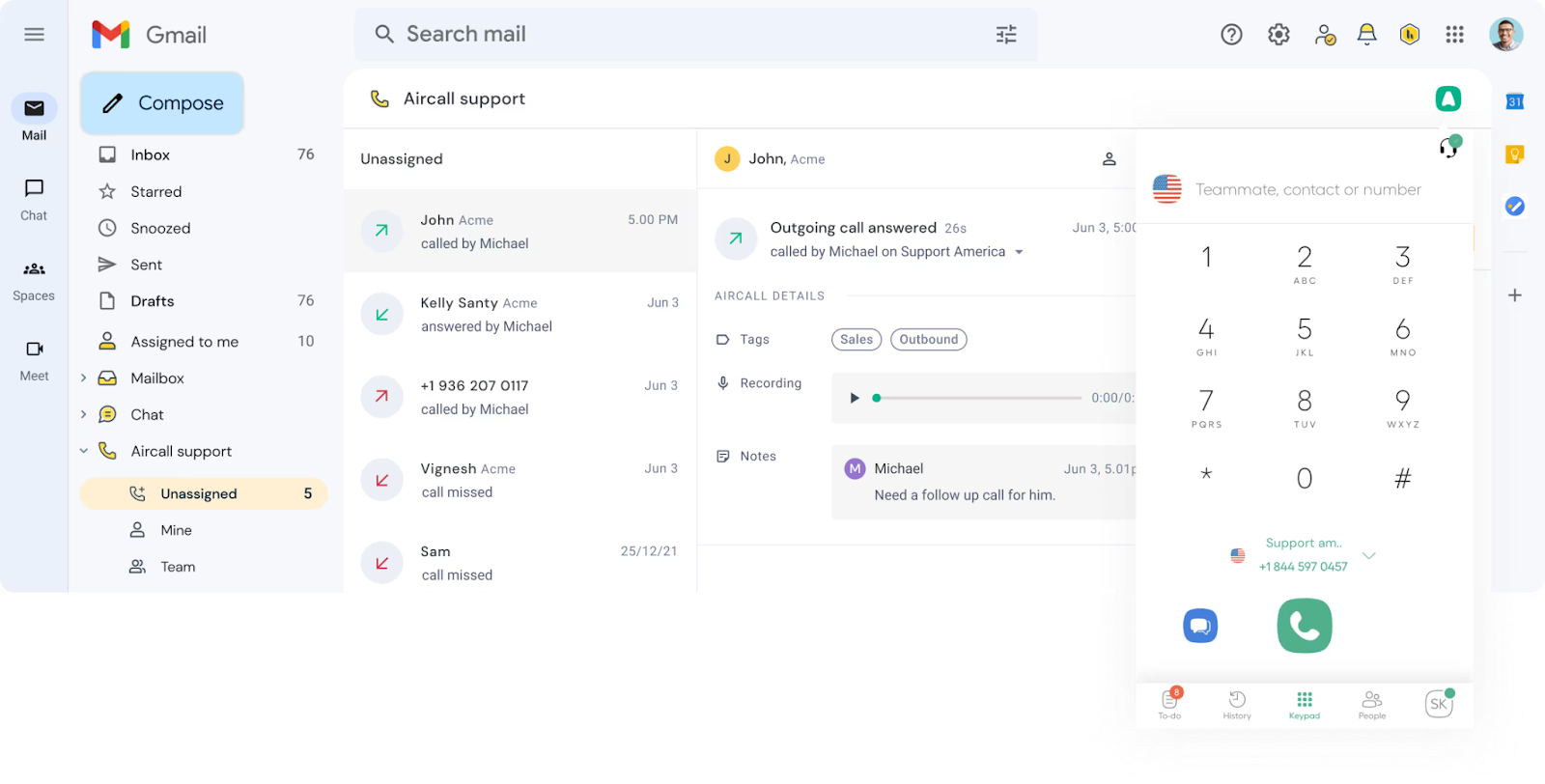
How it works:
- Make and receive calls right inside Gmail.
- Assign calls to team members for clear ownership and accountability.
- Automatically log all conversations to track and resolve issues faster.
- See all relevant details for every call in one place.
Simple, seamless, and built for teams that want to streamline voice support.